
Cavity wall insulation grant
A cavity wall insulation grant pays to fill the gap between the two layers of your outside walls. Most homes built after the 1920s have that gap.
- £2,200
- A semi typically costs this much without a grant
- £200
- What that semi saves each year
- 5 years
- Or less for the savings to cover the cost
Which cavity wall insulation grant fits you
Every part of the UK runs its own scheme. If the survey finds the walls need it, all of them can cover cavity wall insulation.
| Where you live | Scheme | What you pay |
|---|---|---|
| England | Warm Homes: Local Grant | Nothing, if your household qualifies |
| Scotland | Home Energy Scotland grant and loan | You pay whatever a grant of up to £1,500 doesn't cover, and a loan of £500 can help. |
| Scotland | Warmer Homes Scotland | Nothing in most cases |
| Wales | Warm Homes Nest | Nothing, if your household qualifies |
| Northern Ireland | Affordable Warmth Scheme | Nothing for owners; landlords pay half |
Home Energy Scotland is where the Scottish grant and loan amounts come from. Across England, Wales and Northern Ireland, income or benefits decide who gets free cavity wall insulation; the grant checker shows the rule for your postcode.
What the survey checks before a cavity is filled
Damp can get trapped if you fill a wall that isn't suitable. Before drilling anything, a good installer checks the following:
- whether the walls face extreme weather or flooding;
- if the cavity is under 50mm, which is common in homes built before the 1920s;
- if there's damage to the brickwork or pointing;
- if airbricks and vents remain open, so your house can still breathe.
A brick wall that's between 260mm and 350mm thick is probably a cavity wall. The Energy Saving Trust supplied the checks.
The cost of cavity wall insulation with no grant
An uninsulated home loses about a third of its heat through the walls. These typical costs and savings assume a home in Great Britain that's heated with gas.
| Home | Cost | Saving a year |
|---|---|---|
| Mid-floor flat | £950 | £110 |
| Mid-terrace | £1,100 | £110 |
| Detached bungalow | £1,700 | £160 |
| Semi-detached | £2,200 | £200 |
| Detached | £3,900 | £380 |
In Northern Ireland, expect a semi to cost about £1,000 and save about £240 a year. The figures are from the Energy Saving Trust.
How installers do the work
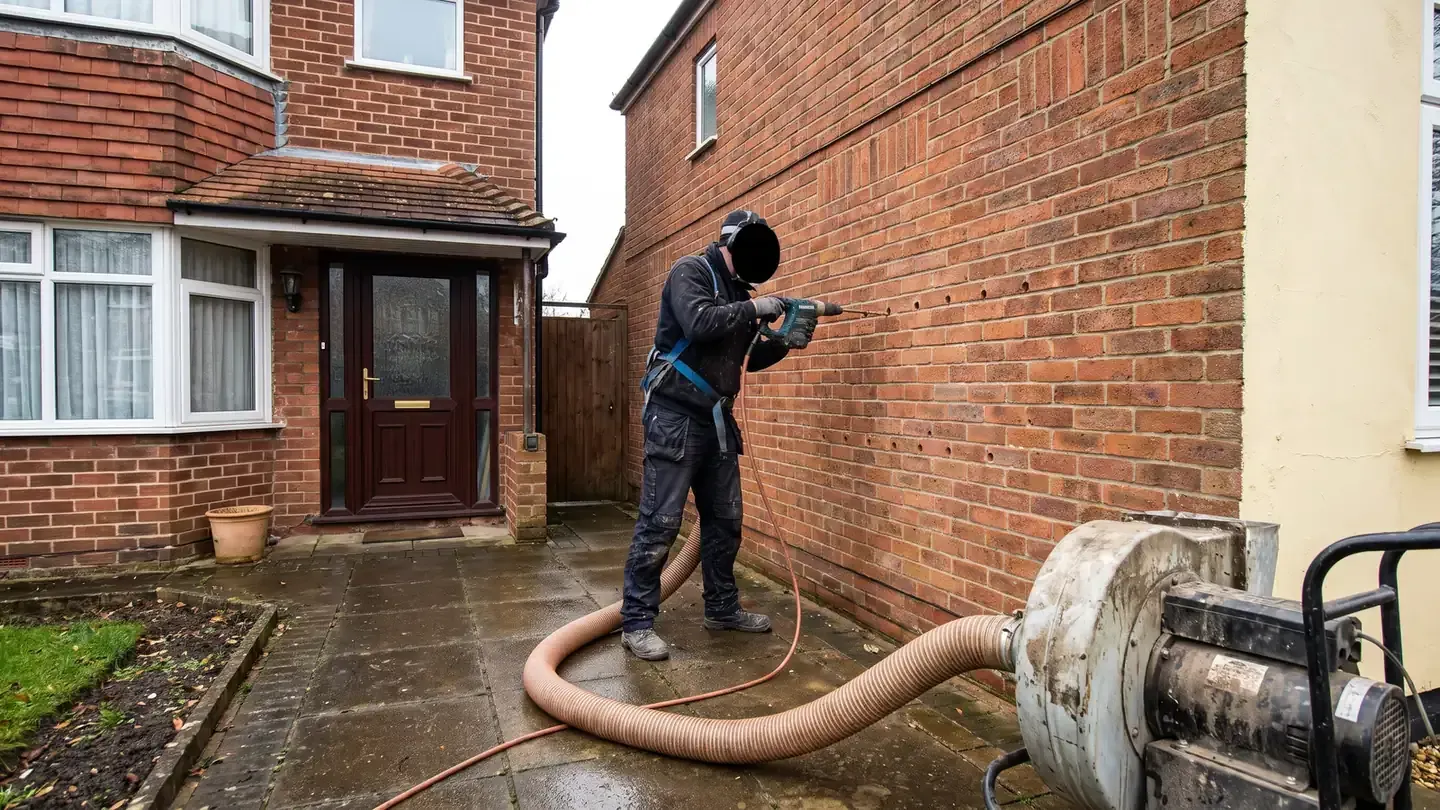
Small holes, about 22mm across, are drilled in the outside wall, roughly a metre apart. Polystyrene beads are the usual insulation; they're blown into the cavity, and the holes are filled afterwards. You can paint over filler that doesn't match the brick. The Energy Saving Trust is the source for these steps.
Before work starts, ask for a 25-year guarantee backed by insurance, either through CIGA or another scheme. Walls that turn out to be solid call for solid wall insulation instead. Grant schemes treat it as a separate measure: see the solid wall insulation grant guide.
The other cheap win is your loft. Read more on the loft insulation grant.
Common questions about cavity wall insulation grants
Can I get free cavity wall insulation?
Yes, if your household qualifies for the main scheme where you live, such as the Warm Homes: Local Grant in England or Nest in Wales. Owners who qualify pay nothing.
How do I know if my house has cavity walls?
Homes built after the 1920s usually do. Look at the brick pattern: cavity walls have every brick laid lengthways. Solid walls show the short ends of some bricks.
Does cavity wall insulation cause damp?
It should not if it is fitted to a suitable wall. The installer should check for exposure to driving rain or flooding, narrow cavities and damaged brickwork before filling.
What guarantee should I get?
Ask for an independent, insurance-backed guarantee lasting 25 years, such as one from CIGA.
My walls were filled years ago. Can a grant redo them?
Only if the survey finds the old fill has failed. Schemes pay for work the assessment says the home needs.
Get an installer survey quote
Want a survey and a price for your walls? An accredited installer can check the cavity and quote.