
Disabled Facilities Grant
Your council gives a Disabled Facilities Grant to adapt a home so that a disabled person can keep living there. The money can cover ramps, wider doors, a stairlift, heating that suits their needs, or a level-access shower.
- £30,000
- In England this is the top figure, but some councils pay more
- £36,000
- The top amount in Wales
- £35,000
- Northern Ireland's usual limit
How much is a Disabled Facilities Grant?
Where you live sets the limit. The approved cost of the work sets the amount, and for most adults so do household income and savings above £6,000.
| Where you live | Who pays it | How much |
|---|---|---|
| England | Your council | Up to £30,000; some councils add more |
| Wales | Your council | Up to £36,000 |
| Northern Ireland | The Housing Executive | Up to £35,000 for a low income, or as much as £70,000 in some cases |
| Scotland | Your council, under its scheme of assistance | 80% or more of the qualifying cost; 100% if you get certain benefits |
The amounts used for England and Wales are taken from GOV.UK, for Northern Ireland the figures come from nidirect. A new application for the same home is possible if your needs change later.
Who can get a Disabled Facilities Grant
The disabled person could be you or anyone who lives with you. They must plan to stay in the home for the grant period, which is usually 5 years. Among them are those who:
- are autistic, or have a physical or a learning disability;
- have dementia, or needs tied to age;
- have an illness that is terminal or progressive;
- have a condition affecting their mental health.
What does your council have to agree to?
Applications are open to the owner, the landlord or the tenant. Before paying, the council must be satisfied that the work is:
- needed and appropriate for the disabled person;
- sensible and practical given the age and condition of the home.
After approval, the work should be done within 12 months.
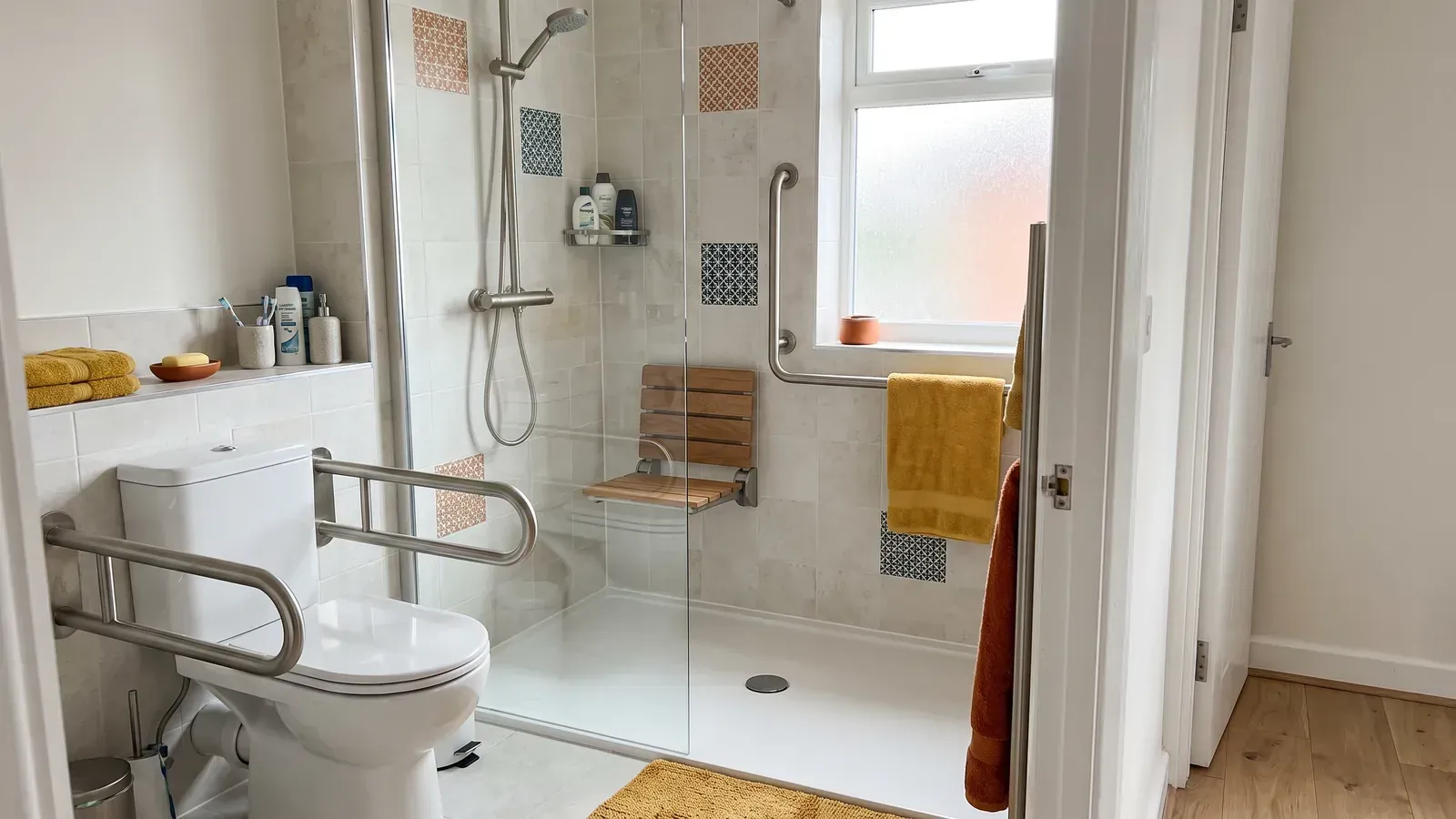
Disabled Facilities Grant for a bathroom
One of the main jobs the grant covers is a bathroom the disabled person can't use safely. It can cover:
- replacing a bath with a level-access or walk-in shower;
- putting in grab rails and making the door wider;
- adding a downstairs bathroom, as an extension when there's no room inside.
Every council in Scotland must fund the work if it means a disabled person can use a sink, shower, bath or toilet. In Northern Ireland the Housing Executive will fund bathroom access, plus extra bathroom facilities recommended by an occupational therapist.
How to apply for a Disabled Facilities Grant
- Get in touch with your council. In England and Wales, use GOV.UK's council finder to begin. In Northern Ireland, your Health and Social Care Trust is who you contact; it passes the case on to the Housing Executive.
- Expect a visit from an occupational therapist. That person, or a trained assessor, will list what your home requires.
- Quotes and plans. Planning permission and approval under building regulations are dealt with separately. Fees for an architect or a surveyor are among the costs the grant can cover.
- The answer. Councils in England and Wales must make the decision inside 6 months. Don't begin the work until that decision arrives.
- Payment. Payment from the council comes in stages or when the work ends, and it sometimes goes direct to the builder.
In England, Foundations, a government-funded organisation, can help with your application. You can appeal to the council if it turns you down, and afterwards the Local Government Ombudsman can take your complaint.
Disabled Facilities Grant in Scotland, Wales and Northern Ireland
- Scotland: the Disabled Facilities Grant doesn't exist there. Your council's scheme of assistance pays no less than 80% of eligible adaptations. It pays in full if you're on income-related ESA, income-based Jobseeker's Allowance, Universal Credit, Income Support, or Pension Credit guarantee credit. Citizens Advice Scotland lays out the rules.
- Wales: the council gives up to £36,000. There's no means test for parents when the disabled person is a child or a young person under 19.
- Northern Ireland: work your occupational therapist recommends is funded by the Housing Executive, usually up to £35,000. The money reaches you when the work is done and signed off.
Home heating and insulation for someone with a disability
With a Disabled Facilities Grant, the disabled person can get heating that suits them, plus heating or lighting controls that are simpler to manage. Insulation isn't something a DFG covers; the warmth scheme in your area handles that. The grant checker takes a minute and is worth it, since many low-income households or those on a means-tested benefit qualify. Who pays nothing is covered in the guide to the free insulation grant.
Common questions about the Disabled Facilities Grant
What is a DFG grant?
DFG stands for Disabled Facilities Grant. It's the same council grant, and the same rules apply.
Does a Disabled Facilities Grant affect benefits?
No. According to GOV.UK, none of your benefits will be affected by the grant.
Can tenants get a Disabled Facilities Grant?
Yes. It's the owner, the tenant or the landlord who can put the application in. Landlords don't face a means test, but the council may ask that a different disabled person rents the home if the tenant leaves within 5 years.
Does a disabled child face a means test?
The parents don't get means tested. A grant in England for a disabled child under 18 leaves the parents' income out, and Wales does the same up to age 19.
Can the work start before the council approves?
Wait. Starting work ahead of the council's approval could leave you without any grant.
Can a Disabled Facilities Grant pay for a stairlift?
Yes. GOV.UK lists a stairlift among its examples of better access around the home.